
3 hr
Private Cairo Markets & Khan el Khalili Shopping Experience
Discover authentic Egyptian bazaars and historic markets with a dedicated guide on this private tour
Reserve
Hand-picked by our editors — only the best 5 market experiences from 37 reviewed.
Verified partners for every tour, free cancellation where available, and instant confirmation on every booking.
3 hr
Discover authentic Egyptian bazaars and historic markets with a dedicated guide on this private tour
Reserve
6 hr
Explore Cairo's iconic landmarks with an expert guide on this full-day private journey through history
Reserve
4 hr
Journey through medieval Islamic landmarks, Ottoman palaces, and bustling bazaars with an expert guide
ReservePrices from verified partners. Availability updates in real time at checkout. Free cancellation policies apply where shown.
The landmarks, rooms, and views travelers on this tour remember — all visible on a single visit.
Historic cafe operating since 1773 with famous mirror-lined walls.
District where artisans have crafted precious metal jewelry for centuries.
Ancient gate marking the entrance to areas filled with traditional lanterns.
Major historic mosque situated adjacent to the bustling market alleys.
Alleyways where craftsmen continue the tradition of hand-engraving metal.
They complement each other; most visitors who do both call the Comprehensive Old Cairo Historical Tour the more informative experience. While a cairo market tour focuses on deep immersion into local trade, the heritage alternative provides context for the city's architectural landmarks.
| Feature | Top pick Cairo Market Tour | Historic Cairo Tour |
|---|---|---|
Primary Focus |
Artisan crafts and souq culture | |
Total Duration |
2–4 hours | |
Time Spent in Bazaar |
Entire duration | |
Level of Physical Exertion |
Moderate walking | |
Shopping Flexibility |
High independent browsing | |
Guided structure |
Flexible pace and informal cairo market tour tours | |
Inclusion in itinerary |
Standalone attraction or cairo market tour tour | |
| See tickets → |
Verdict: Choose the focused bazaar experience if you prefer independent discovery, or select the historical tour to secure cairo market tour tickets as part of a structured day exploring Islamic Cairo monuments.
Choose your ticket, select your date, and reserve in under two minutes. Secure checkout handled by our verified partner.
Instant confirmation by email, with a mobile voucher you can save offline. No printing, no queuing at a collection desk.
Arrive at the entrance, show your voucher on your phone, and walk in. Most tickets include priority or skip-the-line access.
Practical details for your visit straight from our verified partners — hours, access, rules, and how to get there.
Dress modestly when exploring this cairo market tour, covering shoulders and knees out of respect for local customs. Comfortable walking shoes are essential for navigating the historic stone alleys.
Keep your belongings close and secure during your cairo market tour, as alleys can be narrow and crowded. Standard vigilance against pickpockets is recommended in high-traffic bazaar zones.
Photography is permitted in public market areas during your cairo market tour, though it is respectful to ask vendors before photographing them or their goods. Avoid capturing private residences or sensitive individuals.
The historic design of this cairo market tour location features uneven surfaces and narrow passages that may present challenges for wheelchairs. Strollers can be difficult to maneuver in the densest sections of the souk.
Families are welcome on a cairo market tour, but be prepared for high sensory input and crowds. Ensure children stay close in the labyrinthine streets.
Numerous traditional cafes and restaurants are integrated into the cairo market tour experience, offering authentic Egyptian tea and snacks. Drink bottled water to stay hydrated during your walk.
Best time to go, insider tips, nearby landmarks, and the cancellation fine print — flip through to skim what matters to you.
Flexible, no hidden fees.
Cancellation terms depend on the specific cairo market tour provider. Consult your booking confirmation for the refund window regarding the 0 EGP entrance fee.
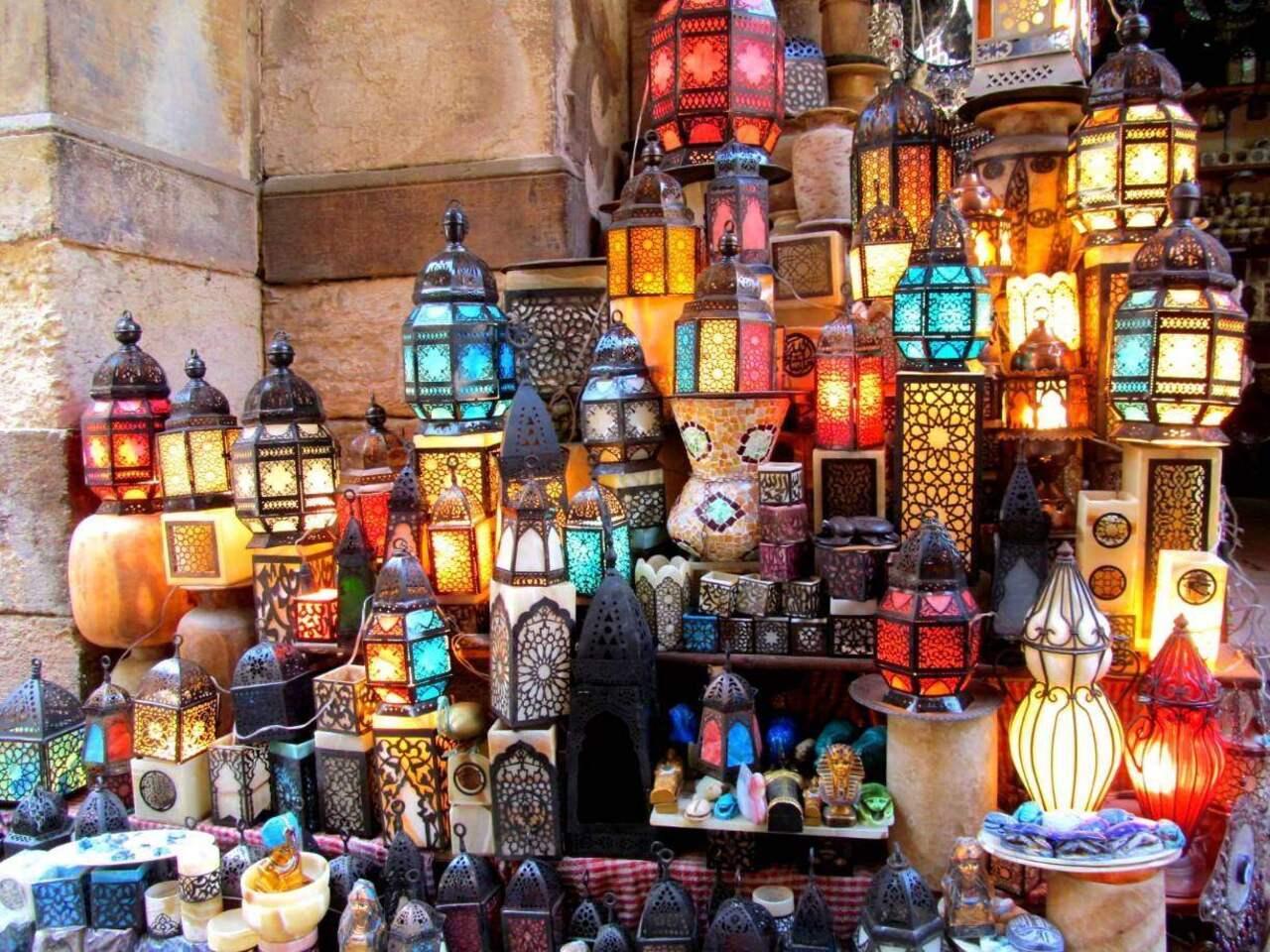
Khan el-Khalili has operated without interruption since Sultan al-Ghuri rebuilt its caravanserais in 1511, anchoring a commercial district that predates the Ottoman conquest by three centuries. The bazaar occupies what was once the mausoleum complex of the Fatimid caliphs, demolished to make way for a trade hub connecting caravans from Asia, North Africa, and the Arabian Peninsula. Goldsmiths, silk merchants, and spice traders established workshops within its vaulted stone passages, creating a self-contained economy that survived Mamluk decline, Napoleon's invasion, and British occupation. Today the souq remains Cairo's commercial heart, a working market where artisans still hammer brass trays in open-front stalls and glassblowers shape perfume bottles using techniques unchanged since medieval guilds regulated every craft. The district extends beyond the central Khan into adjacent quarters—Nahhasin for metalwork, Ghouriya for textiles, Sagha for jewelry—each street preserving its historic specialization. Tourists navigate the same limestone alleyways that medieval merchants used, passing beneath Mamluk-era doorways and wooden mashrabiya screens that filter afternoon light into geometric patterns. A Cairo market tour through Khan el-Khalili typically includes the Al-Fishawi Café, operational since 1769, where servers pour mint tea from verdigris-stained copper pots, and the Sultan al-Ghuri complex, where a restored wikala (merchant inn) hosts Thursday Sufi performances in its stone courtyard. Private shopping experiences move beyond the tourist-facing brass and papyrus vendors into backstreet workshops—one metalsmith family has occupied the same stall since 1847, their ledger documenting five generations of orders for mosque lanterns and wedding trays. Street food walks incorporate stops at century-old koshari vendors and falafel carts operating from pre-dawn through the evening call to prayer. The district's architectural fabric records seven centuries of Cairo's building traditions. Bahri Mamluk gates with chevron stonework stand beside Ottoman-era sabils (public fountains), their facades inlaid with marble panels and Quranic inscriptions. Stone carvers still work in doorways cut during the Ayyubid period, repairing mashrabiya lattices for clients who arrive with heirloom patterns traced on translucent paper. Tour routes pass mosques where wooden minarets lean at angles that would alarm modern engineers but have stood since the fourteenth century, their foundations sunk into Fatimid rubble and Roman spoils.
"One metalsmith family has occupied the same stall since 1847, their ledger documenting five generations of orders for mosque lanterns and wedding trays."
A step-by-step walkthrough of the visit — what you'll see, how long each stage takes, and the details that matter.
You enter Khan el-Khalili through the Bab al-Badistan gate just after 10:00, when stallholders are unlatching wooden shutters and sweeping limestone thresholds worn concave by foot traffic. Your guide steers you past the brass lamp vendors clustered near the entrance, leading instead down a narrow alley where a coppersmith is already hammering patterns into a tray, each strike echoing off stone walls. You pause at a perfume shop where the owner blends attars in thumb-sized glass vials, explaining the difference between rose otto and jasmine absolute as he dabs samples on your wrist. The route cuts through Nahhasin street, lined with stalls selling hand-chased trays and engraved coffeepots stacked to the ceiling. You watch a calligrapher ink Quranic verses onto copper plaques, his reed pen moving in fluid strokes. At Al-Fishawi your group occupies a corner table beneath sepia photographs of Naguib Mahfouz, the novelist who drafted scenes here before dawn. The waiter brings mint tea in scratched glasses and a plate of konafa, the syrup pooling on worn marble. You continue into the textile souq, where bolts of Assiut shawls and hand-blocked cottons lean against doorways. Your guide negotiates entry into a workshop where two men operate a wooden loom, shuttles clicking as they weave a Bedouin pattern commissioned for a hotel in Siwa. You emerge near the Al-Azhar mosque courtyard as the noon light flattens against its striped ablaq stonework, the market's noise momentarily distant.
Entry to all public areas of the bazaar is 0 EGP.
The best arrival window is 10:00–12:00 to avoid peak crowds during your cairo market tour.
No entrance tickets are needed for the market itself, though professional guided cairo market tour excursions may include fees for additional services.
The historic lanes have uneven terrain, so a cairo market tour may be difficult for those with mobility issues.
You can carry small bags, but keep valuables secure during your cairo market tour.
Yes, photography is generally allowed in public areas of this cairo market tour.
Families are encouraged to join a cairo market tour, provided they remain attentive in busy areas.
The market is located in El-Gamaleya, accessible via taxi or rideshare to Al-Hussein Square for your cairo market tour.
Dress modestly in breathable clothing, suitable for the summer heat during your cairo market tour.